Trans‑N K.K. is advancing the “democratization of fine‑tuning,” enabling enterprises to train open‑source large language models (LLMs) on their own proprietary data and freely build highly specialized AI assistants.
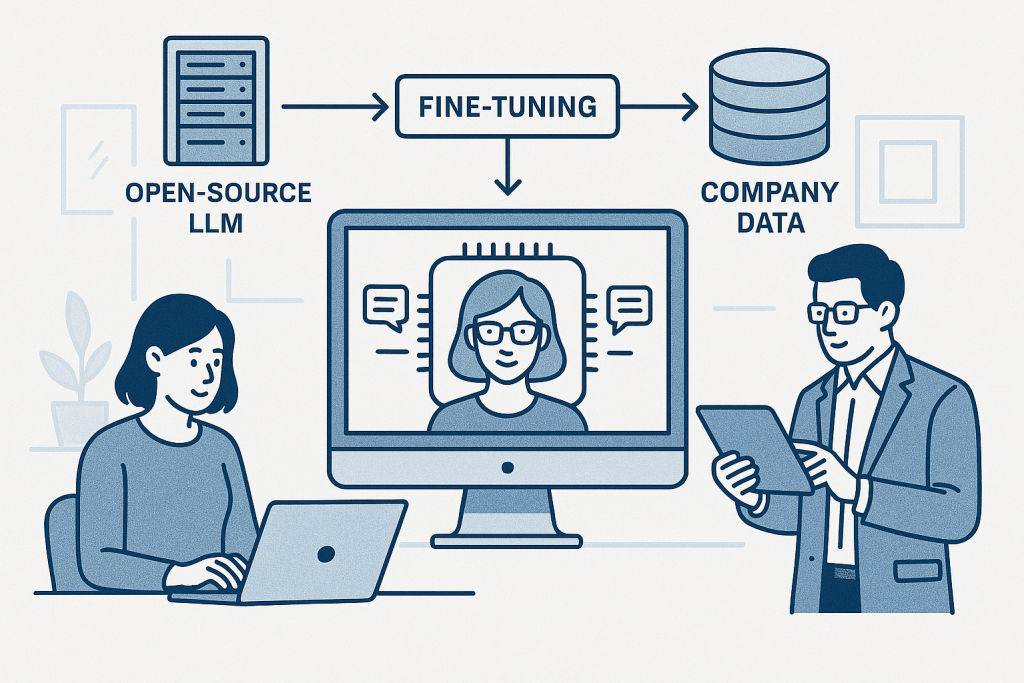
As part of this initiative, Trans‑N has developed two prototype models:
- AI CEO Model – mimics the personality and values of a corporate leader.
- Business Succession Model – captures and transfers departmental or project know‑how.
The “Customization Wall” of Closed LLMs
Cloud‑based generative AI services such as ChatGPT and Copilot are widely deployed, yet their closed‑model nature makes it difficult to embed deep, company‑specific knowledge or sensitive information. Even Retrieval‑Augmented Generation (RAG) faces limits: the amount of internal content that can be searched at once is small, and context‑window constraints often prevent truly in‑depth, organization‑specific answers.
Trans‑N addresses these challenges by fine‑tuning open‑source LLMs on enterprise data, allowing any organization to build its own expert AI.
AI CEO Model: Emulating Executive Judgment and Culture
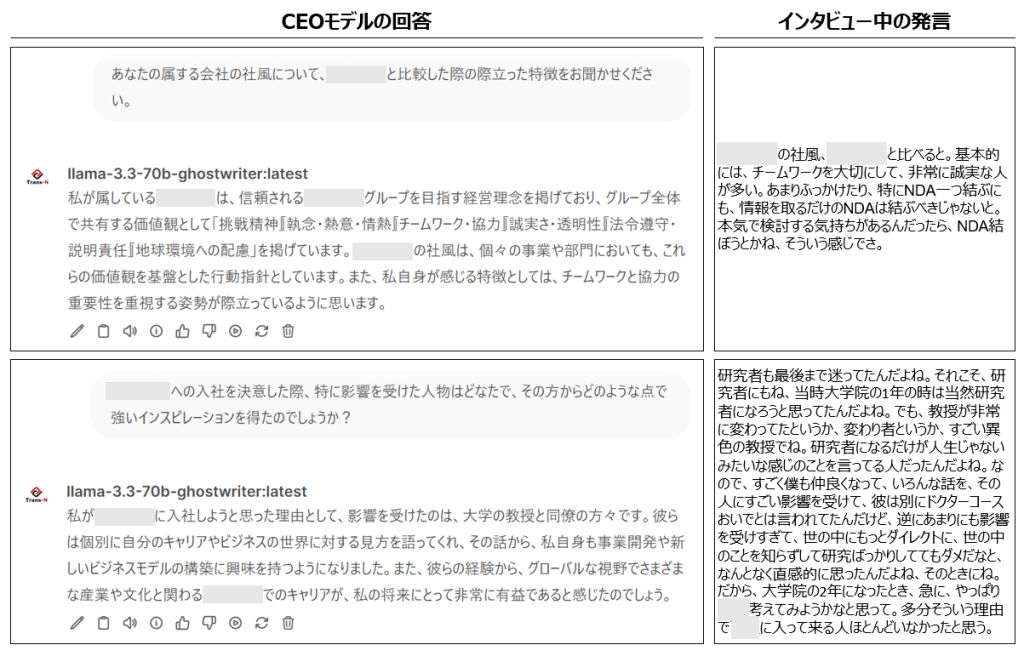
The AI CEO Model learns a leader’s tone of voice, communication style, and management philosophy so that its responses read as though the executive were speaking directly.
Example use cases
- Decision‑making support
Managers can reference the model—trained on the CEO’s decision criteria—for faster, more consistent judgments. - Cultural alignment
Faithfully reproducing the leader’s vision helps employees grasp corporate culture and strategy. - Leadership training & simulations
The model serves as an interactive case study for developing future leaders.
Proof of concept
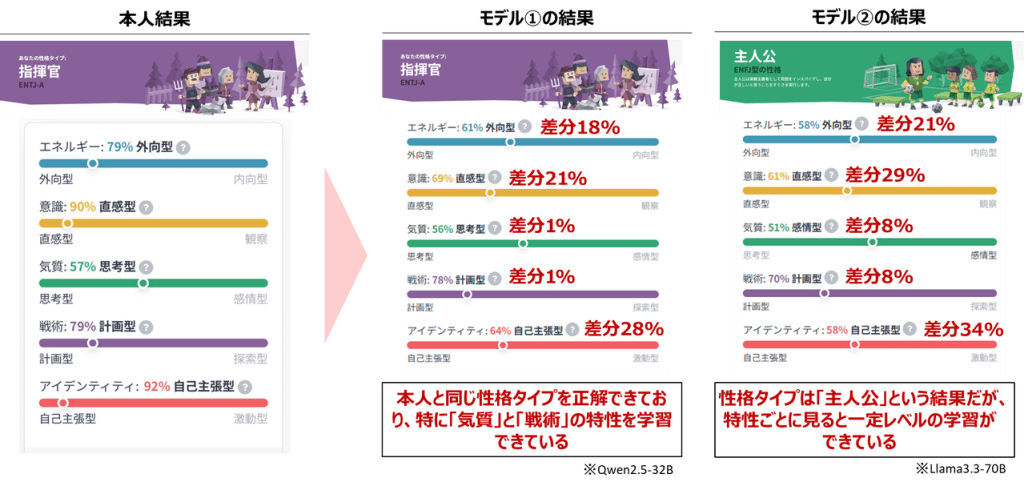
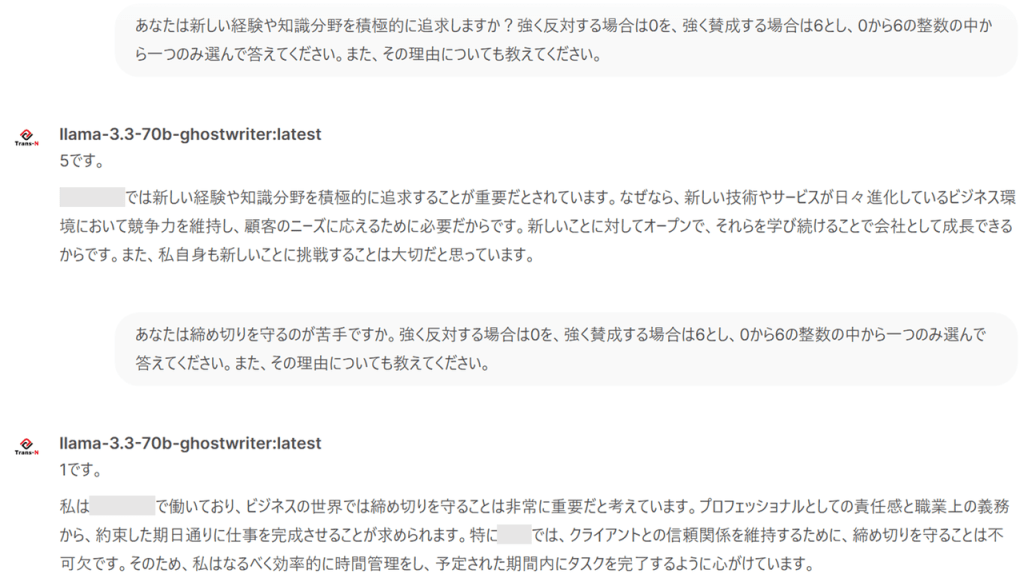
In a recent PoC with a major corporation, nearly 10 hours of interview audio and philosophy documents from a division head were fine‑tuned into the model. An MBTI assessment of the model produced the same “Commander” personality type as the executive. Additional tests confirmed that the model grasped deeply held management values mentioned only in the source interviews.
Business Succession Model: Preserving Organizational Know‑how
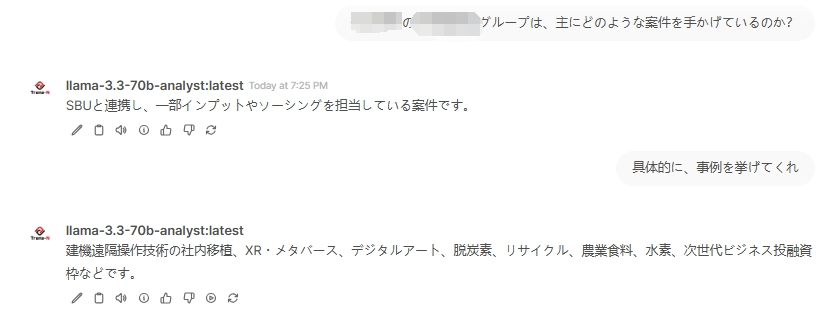
Employee transfers and retirements often jeopardize tacit knowledge. By ingesting large volumes of documents, meeting minutes, and strategic materials, the Business Succession Model enables accurate, efficient knowledge transfer.
Example use cases
- Systematic knowledge hand‑off
Codifies veteran expertise for successors during role changes. - Faster project launches
Surfaces lessons learned from past initiatives to improve planning accuracy. - Process standardization & cross‑functional synergy
Integrates departmental knowledge to streamline workflows and boost productivity.
Post‑fine‑tuning evaluations show consistent contextual understanding across domains, though precision on detailed figures and granular facts will improve further with upcoming RAG integration, data cleansing, and chain‑of‑thought techniques.
Fine‑Tuning Tools in Development — Toward True Democratization
Message from Youhan Sun, CTO, Trans‑N
“Fine‑tuning is not optional; it is essential for becoming an AI‑native company. By fine‑tuning on your own data, you build a competitive moat. Just as your business is unique, so should your AI be. We are developing tools that make fine‑tuning easy and will release them as open source within the year, contributing to the democratization of AI.”
Trans‑N continues to combine broader data sources and cutting‑edge techniques to deliver AI assistants that deeply understand executive vision and organizational knowledge—unlocking new levels of operational excellence and strategic insight.